Nasi Padang: Indonesia's Most Famous Food, and the Day I Finally Got to Eat It
Vegigo · Sep 4, 2026
I have walked past a lot of Padang restaurants. If you're vegetarian in Indonesia, that's most of what you do with them. The window is full, the smell is incredible, and you keep walking, because you know that four-fifths of what's stacked in there is beef.
So this is partly an explainer, because nasi padang deserves one, and partly the story of the afternoon I finally sat down and let them bring me everything.
What nasi padang actually is
Nasi padang is the food of the Minangkabau people of West Sumatra, named after Padang, the provincial capital. Rice, plus a choice from a display of dishes: slow curries (gulai), chilli-braised things, fried things, a leaf vegetable, sambal. Nearly all of it is cooked in coconut milk with chillies, turmeric, galangal, lemongrass and lime leaf, for long enough that the sauce clings.
The dish everyone knows is rendang. Beef simmered in spiced coconut milk for hours until the liquid has gone and the meat is dark and dry. Readers of CNN voted it the best food in the world in 2011 and again in 2017. Indonesians will tell you, without irony, that the vote was correct.
The ordering ritual is the part I'd always wanted to experience. In a proper rumah makan Padang, you sit down and say nothing. Waiters arrive with a dozen small plates balanced up their forearms, cover your table with them, and leave. You eat from whichever you want and pay only for what you touched. The rest goes back. It's called hidang, and it's one of the great restaurant rituals anywhere.
If that's too much, you point at the window and get one composed plate. Takeaway is nasi bungkus, wrapped in paper, and every Indonesian will swear the rice portion is bigger when it's wrapped.
Why it's on every street
There are Padang restaurants in every Indonesian city and most towns, and the reason is merantau: the Minangkabau tradition that young men leave home to make their way somewhere else. For generations, the way they made their way was by opening a restaurant. The Minang are Muslim, so the food is halal by default, which makes a Padang kitchen a safe stop for most of the country. From Aceh to Papua, everyone recognises the tiered window.
That's why nasi padang feels like national food rather than regional food. It's also why it's such a strange blind spot if you're vegetarian. The food that's closest to hand, everywhere, for the whole country, is one you can only half eat.
The problem, honestly
A normal Padang window is mostly meat: rendang, dendeng, chicken curry, fried chicken, offal, fish. The plant dishes exist and they're good. Sayur daun singkong (cassava leaf in coconut milk), gulai nangka (young jackfruit curry), tempe and tahu in chilli, terong balado. But they come out of a kitchen where the stock, the ladles and the sambal often carry meat or shrimp paste, and nobody at the counter is thinking about that unless you make them.
Our Indonesia guide has the workaround: point at the dishes cooked in their own pan, ask about terasi directly, skip the gulai sauces unless you know how they started. It works. It's also tiring, and it means the famous dish, the one everyone talks about, stays off your plate.
The afternoon in Tanjung Duren
Padang Nusantara Vegetarian is on a small street in Tanjung Duren, West Jakarta. From outside it looks exactly like every Padang place I'd ever walked past: the tiered window, the stacked plates, that warm brown-and-red of everything cooked in coconut milk. I stood there for a second out of habit before I remembered I didn't have to.
The restaurant
OrderRendang, gulai nangka, sayur daun singkong, and both sambals
A full Padang window with nothing to avoid. Rendang made with jackfruit and tempeh, gulai without meat stock, sambal without shrimp paste. The most-verified kitchen on Vegigo in Indonesia.
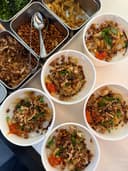
I sat down and said nothing, and they covered the table.
I went for the rendang first, obviously. It's jackfruit and tempeh, cooked down the same way as beef until the coconut milk has darkened and stuck to it. It isn't pretending to be beef and I was glad about that. What it nails is the thing rendang is actually about, which is the spice paste after hours of reduction: sweet, hot, deep, a little grainy from the toasted coconut. The jackfruit shreds, so it takes the paste better than I expected.
I should say here that I don't handle chilli well. Padang food is not gentle, and this kitchen doesn't tone it down because it's vegetarian. By the second sambal, the green lado ijo, my eyes were watering and I'd gone through most of the rice just to keep going. I enjoyed every bit of it anyway. There's a particular kind of happiness in eating something that's too spicy for you and not stopping, and I hadn't had it in years, because I hadn't been able to eat this food at all.
The gulai nangka was the one that got me, though. It's the dish I'd normally have to interrogate, because the sauce is usually started with meat stock. Here it wasn't, and I could just eat it without the small background worry I'd stopped noticing I carried. The cassava leaf tasted like it does everywhere. That was the point.
I paid for the plates I'd touched, which was most of them, and walked out with my mouth still burning and a very stupid smile.
Why it's more than one restaurant
The takeaway isn't that one kitchen in West Jakarta cooks Padang food without meat. It's that a cuisine most vegetarians have written off turns out to work almost completely without it, because the flavour was never in the meat. It was in the spice paste, the coconut milk and the hours. Rendang is a technique before it's a beef dish.
Padang Nusantara has been checked by more Vegigo users than any other restaurant in the country, across pure vegetarian, vegan, halal and no-onion-garlic rules. That tally is on the restaurant page and it's live. If you've been in Jakarta long enough to be tired of walking past Padang windows, go and let them cover the table. Bring water.
Ready to find your next meal?
Every restaurant on Vegigo carries evidence from diners who eat like you.
Explore verified restaurants →Get notified when we publish
One email per new blog post. No spam, unsubscribe anytime. Privacy policy.